New Sanitary Regulation for Beauty Salons
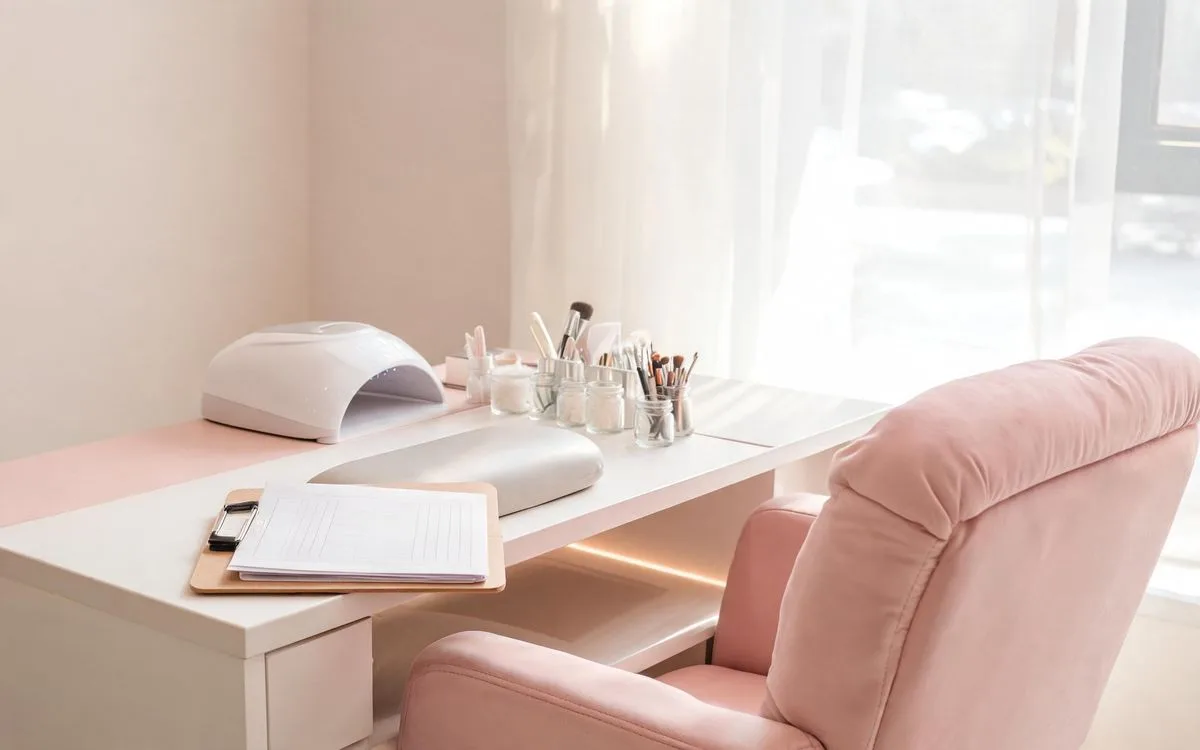
The legal vacuum is over: a minimum 4 m² sterilisation station, a ban on hand jewellery and two different deadlines for adapting your salon.
On 3 August 2026 a new Regulation of the Minister of Health on detailed sanitary and hygiene requirements for hairdressing, cosmetic, tattoo and body-care services entered into force in Poland. It is the first act in years that states directly how your salon must be organised - and it ends the legal vacuum that surrounded this question.
If you have read anywhere (including on this blog) that "the 2004 regulation was repealed and has no successor" - that sentence was true until 2 August 2026. From 3 August it is out of date.
Why this matters
For several years technical requirements for beauty salons were a set of good practices. Workstation area, height of washable walls, zone layout - inspectors referred to the repealed regulation of 17 February 2004, but had no basis to enforce it. Hence the notorious inconsistency: what passed in Warsaw failed in Krakow.
The new regulation closes that gap. Requirements stop being a matter of local interpretation and become law.
What changes in practice
Sterilisation area with fixed dimensions
- minimum 4 m² for the sterilisation station,
- minimum 1.5 m between the sterilisation station and the area where you serve clients,
- a separate entrance to the premises or a clearly demarcated area,
- an autoclave meeting the PN-EN 13060 standard.
For a home-based salon or a small 20-25 m² unit this is a real change of layout, not cosmetics. We cover it separately in the article on who may perform sterilisation.
Who may sterilise
The person performing sterilisation must hold the professional title of medical sterilisation technician, or at least secondary education plus a completed qualification course in sterilisation and disinfection technology. This affects most single-person salons where the owner sterilises herself.
Ban on hand jewellery
Wearing jewellery on hands during services is prohibited. Rings, wedding bands, bracelets - all off. It is the easiest change to implement and the one an inspector sees in the first second, without opening a single file.
Ventilation and humidity
The regulation requires effective room ventilation and, in wet treatment zones, humidity control. This is the first time ventilation in a beauty salon has its own legal basis rather than only general health-and-safety rules. The deadline here is the shortest of all - see our article on six months for ventilation.
No services in common areas
Services may not be provided in corridors or other common parts of a building.
Two different clocks
| Area | Adjustment period | Deadline |
|---|---|---|
| Ventilation | 6 months | early February 2027 |
| Sterilisation equipment and staff qualifications | 2 years | August 2028 |
| Everything else (jewellery ban, documentation) | none | in force since 3 August 2026 |
Note the third row. Transitional periods cover investments - rebuilding ventilation and obtaining qualifications. Organisational and documentation requirements apply immediately.
Documentation is required by the regulation itself
The new act imposes an obligation to keep written procedures and records, including:
- cleanliness and decontamination procedures,
- staff training documentation,
- equipment maintenance and inspection records (including the autoclave),
- contracts and handover protocols for external sterilisation - kept for 10 years.
That ten-year retention is a novelty the industry is not yet talking about. If you outsource sterilisation, handover slips stop being scraps to bin after a month.
Where to start this week
- Take jewellery off your hands and tell your team. Zero cost, already in force.
- Check your autoclave standard. PN-EN 13060 means you are fine; if not, you have two years and a purchase decision.
- Measure the sterilisation area - 4 m² and 1.5 m clearance.
- Count the ventilation deadline. Six months ends in early February 2027 and installers do not have free slots overnight.
- Extend your documentation with an equipment maintenance record and an archive of external sterilisation protocols.
Frequently asked questions
Does the new regulation apply to a single-person salon?
Yes. It sets no size threshold and no exemption for sole traders. It covers providers of hairdressing, cosmetic, tattoo and body-care services, including nail, brow and lash styling.
Do I need a separate entrance?
The regulation requires a separate entrance to the building or a clearly demarcated area. In practice, for a commercial unit this usually means separating a zone rather than cutting a new doorway. Confirm your specific layout with your local sanitary station.
I have an autoclave but do not know if it meets PN-EN 13060
The standard should appear in the technical documentation and usually on the rating plate. If you bought a "class B" autoclave for medical use, it likely complies - but confirm it with a document, because the document is what you show an inspector.
Is a distributor training the same as a qualification course?
No. The regulation requires a qualification course in sterilisation and disinfection technology, not an operating briefing for a specific device.
Do I have to rewrite my sanitary procedures?
Not from scratch, but they need review. New elements appear: equipment maintenance records, ten-year archiving of external sterilisation protocols and documented qualifications of the person sterilising. Documentation written before August 2026 does not contain them.