Who May Perform Sterilisation in a Salon
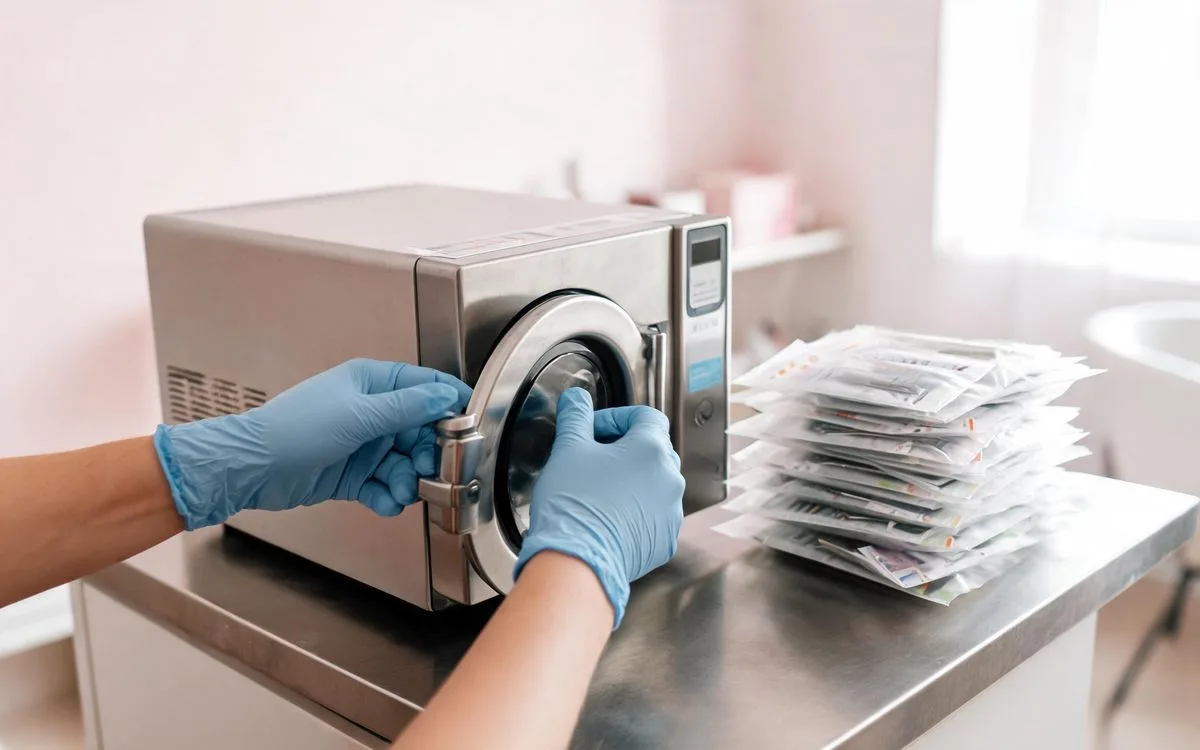
Do you need a course or a diploma to sterilise in a salon? What the statute and GIS guidance say, and what we did not find in the rules.
In short: in the sources we checked there is no rule requiring the person sterilising in a beauty salon to hold a medical sterilisation technician title or a qualification course. The GIS recommendations speak generally of a "person authorised to carry out decontamination" and do not define who that is.
Correction of 28 October 2026. An earlier version of this article presented an education or course requirement as a rule of a "new sanitary regulation", with a two-year transition period to August 2028. We found no such regulation in the Journal of Laws and none of those requirements in the GIS recommendations (details in our article on the GIS recommendations for beauty salons), so we replaced the text.
What the sources say about the person sterilising
- The statute: Article 16 of the Act on preventing and combating infections and infectious diseases in humans (Journal of Laws 2025, item 1675) requires procedures covering, among other things, rules for using sterilised equipment. It does not state the qualifications of the person who sterilises.
- A possible regulation: Article 22(2) of that Act lets the Minister of Health set qualifications of people carrying out cleaning and decontamination procedures. We found no regulation issued on that basis in the Journal of Laws 2025-2026.
- GIS recommendations (May 2026): the effectiveness of the sterilisation process, including the choice of indicators and process challenge devices, is the responsibility of a "person authorised to carry out decontamination". The document sets no education or course.
That does not mean knowledge does not matter. Procedures must be applied and sterilisation controlled, so whoever runs it should understand the whole process. If you want good training, choose a course covering decontamination and sterilisation, but do not treat the certificate as a document required by law until a legal act says so.
Beware of offers of a "certificate compliant with the new regulation"
Since we found no regulation on qualifications, it does not pay to buy a course sold as "required since August 2026". Ask the seller for the Journal of Laws reference. Training from an autoclave distributor is useful, but it teaches how to operate the device, not the decontamination process.
Outsourced sterilisation
The GIS recommendations allow sterilisation by a specialised external provider with a quality management system (ISO or GMP) that guarantees a sterile product. For this option they recommend:
- documents proving regular sterilisation, e.g. a contract, invoices, a log of tools handed over and returned,
- handing over tools in protected packaging and tightly closed transport containers, washed and disinfected after each use.
The recommendations do not state how long to keep these documents. It is sensible to archive them in case of an inspection, but a specific number of years does not follow from the sources we checked.
Autoclave and process control
If you sterilise on site, GIS recommends pressurised steam sterilisation in sterilisers meeting at least EN 13060 (PN-EN 13060 in Poland). Check this in the device's technical documentation, not in the shop description.
- assess every cycle with physical, chemical and biological indicators,
- run biological control at least once a week (biological tests and the sterilisation record),
- check equipment on a schedule, at least once a year, and keep inspection and maintenance records,
- keep sterile material in paper-film packaging, in closed cabinets or drawers, for no longer than 2 months (packaging tools).
More on documentation and equipment: autoclave and sterilisation records.
Three decisions to make
- Do I sterilise myself or outsource? Your own autoclave needs equipment meeting the recommended standard and process control. Outsourcing needs a contract and documents tracking the tools.
- Who in the salon is responsible for the process? Name the person in the procedure and make sure they are trained in decontamination.
- Do the procedures describe the whole chain: pre-disinfection, washing, proper disinfection, sterilisation and storage? Ready-made documents are in the Foundation package, and the starting point is the sanitary procedure template.
See also: Autoclave: What It Is and How It Works; Choosing an Autoclave for a Beauty Salon.
Frequently asked questions
Do I need a sterilisation qualification course to sterilise in a salon?
In the sources we checked (the Act on preventing infections, the Journal of Laws 2025-2026, the GIS recommendations of May 2026) we found no such requirement. The GIS recommendations speak of a person authorised to carry out decontamination, without a definition. If a regulation on qualifications is published we will update this article.
Is training from the autoclave distributor enough?
We found no rule specifying the kind of training. Training on operating the device is useful, but procedures must cover the whole decontamination process, so the responsible person should understand it.
Can I outsource sterilisation?
Yes, the GIS recommendations allow it if the provider has a quality management system (ISO or GMP) and guarantees a sterile product, and you hold documents proving regular cooperation.
How long should I keep sterilisation records?
We found no set number of years in the sources checked. The GIS recommendations say that inspection and maintenance records should be kept. It is worth setting the period in your salon procedure and, if in doubt, consulting the county sanitary inspector, who can review procedures.
Legal status as of: 28 October 2026
Legal basis: Articles 16 and 22(2) of the Act of 5 December 2008 on preventing and combating infections and infectious diseases in humans (consolidated text: Journal of Laws 2025, item 1675); "Hygiene and sanitary recommendations and requirements of the Chief Sanitary Inspector for beauty services" (GIS, May 2026); list of acts in the Journal of Laws 2025-2026 (title search). Not checked: course programmes available on the market, the Official Gazette (Monitor Polski) and draft regulations.
Last reviewed: 28 October 2026