Decontamination Workflow in a Beauty Salon
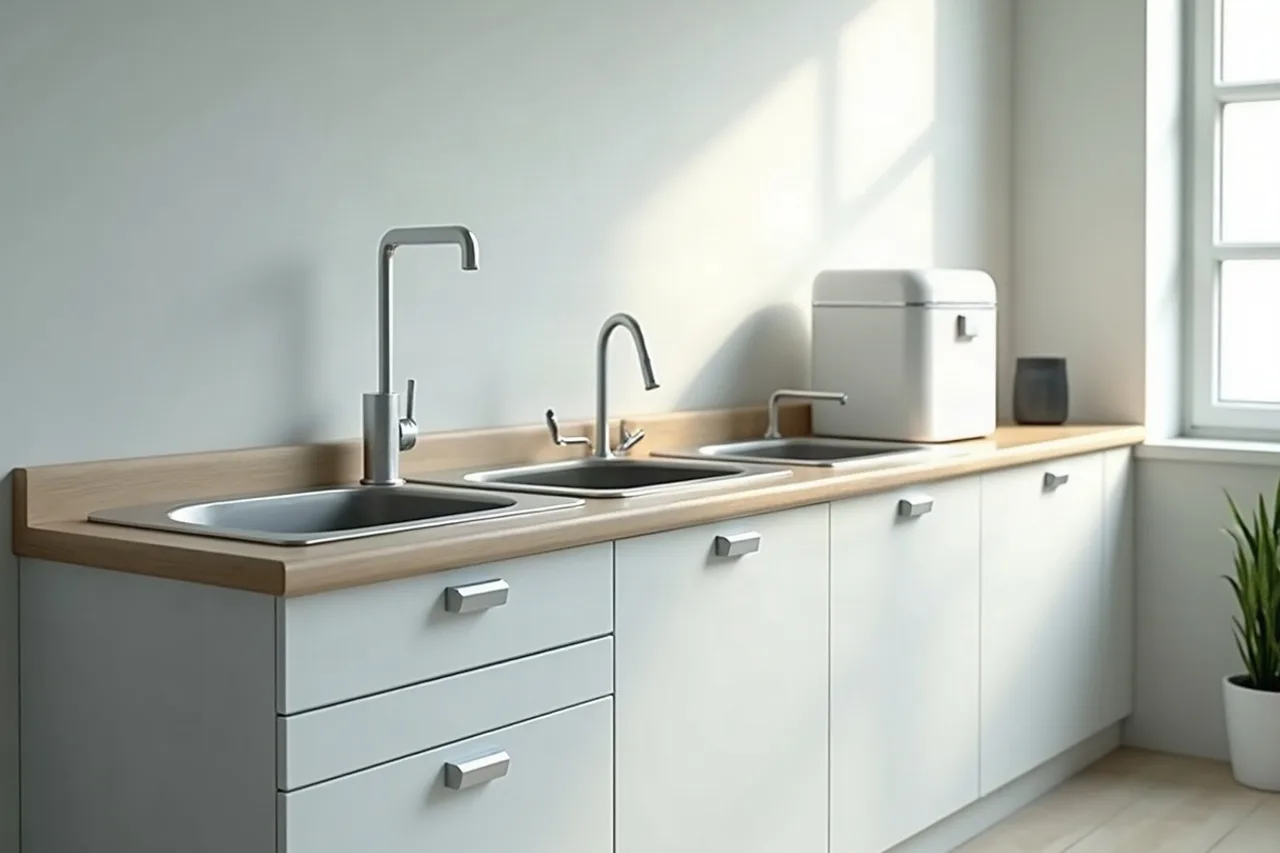
A decontamination workflow in a beauty studio: three areas, the order of work and a layout for a small salon, based on the GIS recommendations of May 2026.
After every client, tools are left that must be brought back to a state in which they may be used on the next person. The route from "dirty" to "sterile" has its own order, and in the recommendations of the Chief Sanitary Inspector (GIS) it is called a technological line. In the industry people talk about a decontamination workflow in a beauty salon. This article explains where the term comes from, what order GIS recommends and how to reproduce it in a small salon with one table and one room.
Key takeaways
- Decontamination means washing, disinfection and sterilisation. A decontamination workflow is an organised place where a tool goes through these stages in one direction.
- The GIS recommendations (May 2026) say that an on-site decontamination place "should include" three areas: contaminated, clean and sterile, with movement from dirty to sterile.
- This is a recommendation, not a provision. The duty in the Act concerns decontamination procedures (Article 16(2)), not a specific layout of worktops.
- Decontamination can be outsourced. Then you do not build a workflow on site, but you keep documents tracking the movement of tools.
- You must not decontaminate during a treatment that breaks tissue continuity. Separation in space and/or time is recommended.
What a decontamination workflow is and where the term comes from
The words "decontamination workflow" do not appear in the Act on preventing infections. Article 16(2) says that procedures are to regulate, among other things, the rules for using equipment that is sterilised and the decontamination of rooms and equipment. The term comes from the GIS recommendations, which use the phrase "technological line", and from the glossary in that document.
The recommendations define decontamination as a process covering washing, disinfection and sterilisation, intended to reduce biological pathogens. According to the glossary, a sterilisation station is "a technological line of devices and equipment enabling washing, disinfection, sterilisation and storage of sterile material". To recall the differences between these terms, see the article on sterilisation vs disinfection in a salon.
Is a workflow mandatory
The answer takes two sentences. First, the Act requires you to implement and apply infection-protection procedures (Article 16(1)), and breaching this duty is punishable by a fine (Article 50(1)). Second, the three-worktop layout is worded in the GIS recommendations as "should include", not as a provision of a regulation. We found no implementing regulation setting requirements for salon premises. The recommendations do show how GIS understands good practice, so it is better to compare your procedures with them and note the differences.
The recommendations add two things important for small salons. They allow decontamination of tools off-site. They also allow sterilisation at a specialised external provider with a quality management system (ISO or GMP).
The order: dirty zone, washing, disinfection, packaging, sterilisation, clean storage
For reusable tools that break the skin (nippers, cuticle scissors, tweezers, metal burs) the GIS recommendations describe consecutive steps. Below is each of them assigned to an area of the workflow (assigning rinsing and drying is our layout).
| Stage | What the GIS recommendations say | Area |
|---|---|---|
| 1. Pre-disinfection | Reduces the number of microorganisms and the drying of soil. Tools may be stored dry for up to 3 hours after use | Contaminated |
| 2. Washing and cleaning | Cleaning agent as the manufacturer advises, below the surface of the solution (no splashing), room-temperature water; an ultrasonic cleaner is indicated as a safe and effective method | Contaminated |
| 3. Rinsing, drying | Rinse under running water and dry | Contaminated / clean |
| 4. Proper disinfection | Immersion technique according to the product manufacturer, at least bactericidal, virucidal and fungicidal action | Contaminated |
| 5. Inspection, maintenance, packaging | Visual check of cleanliness and function, maintenance of joints, sterilisation packaging | Clean |
| 6. Sterilisation and storage | Pressurised steam in a steriliser meeting at least PN-EN 13060; material in paper-film packaging in closed cabinets or drawers for up to 2 months | Clean (sterilisation), sterile (unloading and storage) |
The GIS glossary describes the areas like this: the contaminated area is the sink and worktop where you wash and disinfect contaminated tools, with room to store disinfectants. The clean area is the worktop for drying, packaging and sterilising disinfected tools. The sterile area is the worktop for storing sterile packs and sterile single-use products (cotton pads, papers, towels, sticks, gloves). The general part implies that unloading from the steriliser also belongs to the sterile area.
Tools that do not break the skin take a shorter route: washing and disinfection (the recommendations give brushes, combs and dye brushes as examples). According to the recommendations, single-use paper files are used on one client and thrown away, because they cannot be effectively cleaned and dried. The details of the disinfection steps are in the article on disinfecting manicure tools, and packaging in the article on packaging tools for sterilisation.
How to reproduce the workflow in a small salon
The recommendations allow the decontamination place to be a "separated space". They contain no minimum dimensions or area. Below are suggestions for meeting the idea of three areas when you have one table and one room. These are our ideas, not requirements from a provision.
- One line, one direction. Set up a sink with a contaminated worktop, next to it a clean worktop with room for packaging and the autoclave, and at the end a closable cabinet or drawer for sterile packs. The tool moves in one direction and does not come back.
- Labelling. Label the three zones and do not keep items from another zone in them. The container for used tools stands in the contaminated zone, not at the treatment station.
- Separation in time. If you cannot separate the worktops in space, GIS allows separation in time: you put tools from the treatment in a container and deal with decontamination when no client is in the chair. Dry storage is allowed for up to 3 hours, so plan a break.
- Two sets of tools. With one set, the decontamination cycle lengthens the breaks between clients. Match the number of sets to the number of clients per day.
- External sterilisation. You keep only transport containers and room for packs in the salon. You need a contract, invoices and a log of tools collected and returned, and you wash and disinfect the containers after each use.
How to lay out the same separation in a flat is described in the article on a beauty salon at home.
What to document at each stage
Procedures are to be drawn up, implemented, applied on an ongoing basis and updated. The GIS recommendations list several records that you can put into your documents.
- Disinfectant solutions: label the container with the product name, concentration, date of preparation and the details of the person who prepared it. If the manufacturer has not set a usage time, solutions containing chlorine or active oxygen, among others, are changed daily or after each use.
- Safety data sheets of the disinfectant or workstation instructions should be available to the worker.
- Sterilisation: assessment of every cycle with physical, chemical and biological indicators; biological control at least once a week; load control with a representative pack or a process challenge device with compatible chemical indicators. How to record this is described in the articles on the sterilisation log and the biological test.
- Equipment: a check of function at least once a year (by an authorised service, unless the manufacturer advises otherwise); you keep records of inspections and maintenance.
- Link to the client: GIS recommends documentation that lets you identify the reusable tools used on a given client and the decontamination processes carried out on them.
Common workstation layout mistakes
- Autoclave on the treatment table. The recommendations speak of separating the treatment from decontamination. Unloading from the steriliser belongs to the sterile area.
- Clean and dirty side by side without separation. Tools after disinfection end up next to the container with contaminated ones. The movement from dirty to sterile is no longer visible.
- Packs in an open drawer or next to the sink. GIS recommends clean, dry, closed places protected from moisture, splashed water and disinfectants.
- Hot water for washing. The recommendations specify room-temperature water, because hot water makes soil stick.
- Decontamination near the client. Decontamination activities must not take place during treatments that break tissue continuity.
- No record. The layout exists, but your documents do not describe how you use it. The procedure should say what happens in each zone.
Documents that describe these rules for your salon, including the sterilisation procedure, the tool disinfection card and the disinfection plan, are in the NailsReady Foundation package. A template sanitary procedure is discussed in the article on the sanitary procedure for a nail salon, and the question of who is responsible for sterilisation in the article on qualifications for sterilisation.
Frequently asked questions
Does a small salon have to have three separate worktops?
The GIS recommendations say that an on-site decontamination place should include a line of three areas: contaminated, clean and sterile. This is a recommendation, not a provision of a regulation. They also allow a separated space instead of a separate room, and decontamination off-site. If you depart from the recommended layout, describe in your procedure how you ensure a safe direction of tool movement.
Can I wash tools in the same place where I do treatments?
Decontamination activities must not be carried out during a treatment that breaks tissue continuity. The recommendations speak of separation in space and/or time. In practice this means that after the treatment you put the tools in a container and only then process them, in a separate zone or at a separate time.
How long can tools wait for decontamination?
GIS allows storing tools dry for up to 3 hours after use. After that time the tools should go through the decontamination procedure. Pre-disinfection is recommended to limit the drying of soil.
Do I need a decontamination workflow if I sterilise with an external company?
External sterilisation is allowed if the provider has a quality management system (ISO or GMP) and guarantees a sterile product. You must hold documents of regular cooperation: a contract, invoices, a log of tools collected and returned. The recommendations then do not require a full workflow on site, but you wash and disinfect transport containers after each use. Remember to store packs in conditions that protect them from moisture.
Does Sanepid check the workstation layout?
The inspector may assess whether the implemented procedures are applied and whether they fit the place and type of services. How a specific inspection will assess this, we do not predict. The GIS recommendations do not have the force of a statute, but they show how the authority understands good procedures.
Legal status as of: 2 November 2026
Legal basis: Article 16(1)-(3) and Article 50(1) of the Act of 5 December 2008 on preventing and combating infections and infectious diseases in humans (consolidated text: Journal of Laws 2025, item 1675, amendments published after this text were checked); "Hygiene and sanitary recommendations and requirements of the Chief Sanitary Inspector for beauty services" (GIS, May 2026; chapters I, III, IV, V and the glossary). Not checked: the text of the PN-EN 13060 standard (a paid standard), decontamination guidelines in healthcare entities and their application to salons, local acts, the Official Gazette (Monitor Polski). No implementing regulation under Article 22(2) of the Act setting requirements for salon premises was found.
Last reviewed: 2 November 2026
Procedures and cards for a decontamination workflow
A sterilisation procedure, a tool disinfection card, a sterilisation card and a disinfection plan that describe the order of work in your salon are in the NailsReady Foundation package. Check the scope of documents on the package page.
See the Foundation package